Getting ISO 27001 certified feels like navigating a maze blindfolded when you're doing it for the first time. You know the destination—that shiny certificate that opens doors to new contracts—but the path seems murky at best. Here's the truth: understanding the ISO 27001 certification process: what happens at each stage removes the mystery and helps you plan properly. No surprises, no nasty shocks, just a clear roadmap from start to finish.
Key Takeaways
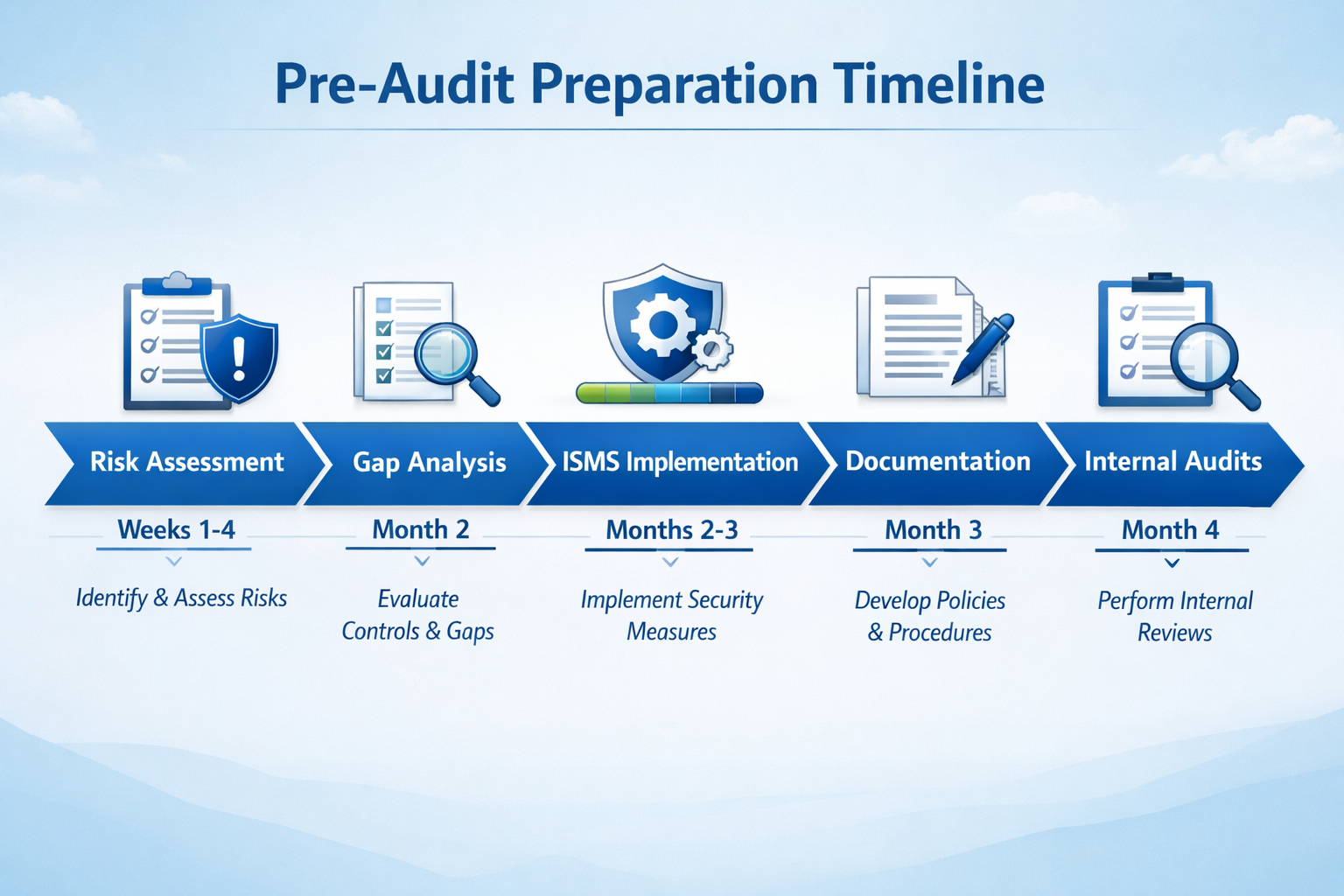
• Pre-audit preparation takes 4 months and includes risk assessment, gap analysis, ISMS design, documentation, and internal audits
• Stage 1 audit focuses on documentation review whilst Stage 2 audit examines actual implementation and effectiveness of controls
• Total certification timeline spans 6-8 months from initial preparation through final certification
• Annual surveillance audits are mandatory during the 3-year certification period to maintain your certificate
• Proper preparation prevents delays - unaddressed Stage 1 findings often become Stage 2 nonconformities that can postpone certification
The Pre-Audit Phase: Building Your Foundation (4 Months)
Before any external auditor sets foot in your business, you need to build an Information Security Management System (ISMS) that actually works. This isn't about creating impressive documents that gather dust—it's about establishing real security practices that protect your data and satisfy ISO 27001 requirements.
Month 1-2: Risk Assessment and Gap Analysis
The ISO 27001 certification process: what happens at each stage begins with understanding where you currently stand. You'll need to conduct a comprehensive risk assessment that identifies your information assets, evaluates threats and vulnerabilities, and determines what could go wrong if someone gains unauthorised access to your data.
This phase typically takes 2-4 weeks and requires you to:
- Define your risk assessment methodology
- Catalogue all information assets (databases, systems, physical documents)
- Identify potential threats and vulnerabilities
- Evaluate and rank risks based on likelihood and impact
- Produce a documented risk register and treatment plan
Running parallel to this, a gap analysis compares your current security practices against ISO 27001 requirements. Think of it as a brutally honest health check that shows exactly what you need to fix, improve, or implement from scratch.
Month 2-3: ISMS Design and Control Implementation
Once you know what risks you're facing, you need to design controls that actually address them. This is where many organisations get bogged down in theory instead of focusing on practical solutions that work in their specific environment.
Your Risk Treatment Plan and Statement of Applicability (SoA) become your roadmap here. These documents don't just tick boxes—they demonstrate how you've chosen appropriate controls from ISO 27001's Annex A and explain why certain controls might not apply to your business.
Month 3-4: Documentation and Internal Audits
Here's where the rubber meets the road. You need comprehensive documentation that proves your ISMS isn't just a collection of good intentions. This includes security policies, procedures, work instructions, and records that demonstrate your controls are actually functioning.
The final step before external auditing involves conducting internal audits. These aren't gentle reviews—they're proper audits that test whether your documented procedures work in practice and whether staff actually follow them. Many organisations discover gaps during internal audits that would have become embarrassing findings during external certification audits.
The External Audit Process: Proving Your System Works
The external audit process follows a structured two-stage approach that's designed to thoroughly evaluate both your documentation and implementation. Understanding what auditors look for at each stage helps you prepare effectively and avoid common pitfalls that delay certification.
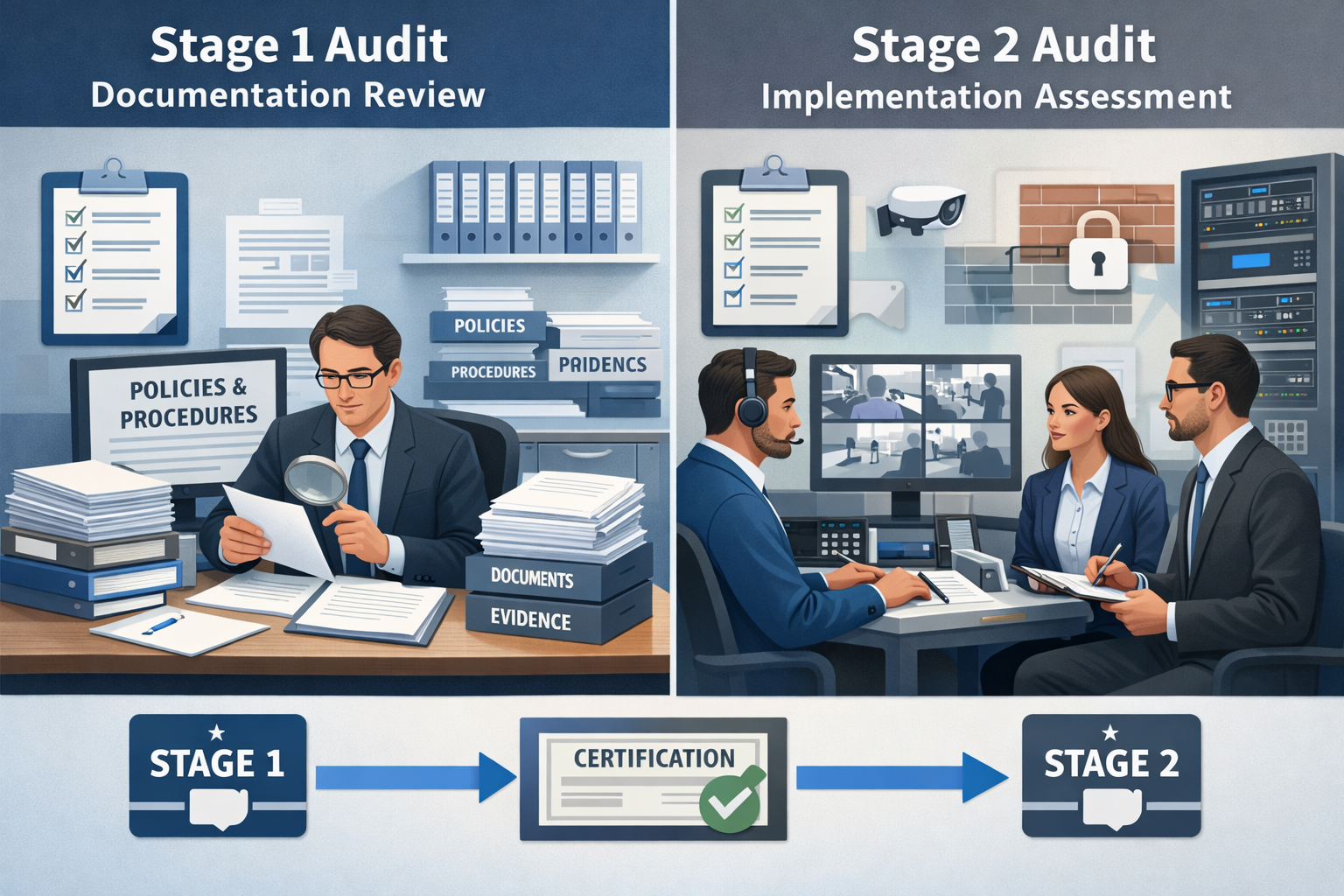
Stage 1 Audit: Documentation Review
Stage 1 is fundamentally a documentation review that happens around month 5 of your certification journey. The auditor evaluates whether you have the required documentation for an operational ISMS, including policies, procedures, risk assessment methodology, and risk registers.
What auditors examine during Stage 1:
- ISMS scope definition - Is it clear what's included and excluded?
- Risk assessment methodology - Does it make sense for your business?
- Statement of Applicability - Have you justified your control selections?
- Security policies and procedures - Are they complete and consistent?
- Management review evidence - Is leadership actually engaged?
The key thing to understand about Stage 1 is that it's high-level and evaluates your designed ISMS against ISO 27001 requirements. The auditor doesn't yet assess whether controls are effective in practice. They're checking that you've built a system that could work, not whether it actually does work.
If the auditor identifies "areas of concern" during Stage 1, take them seriously. These gaps don't automatically fail your audit, but unaddressed documentation issues often become formal nonconformities during Stage 2, which can delay your certification.
Stage 2 Audit: Implementation and Effectiveness Review
Stage 2 is the evidential audit that typically occurs during months 6-8 of your certification process. This is where auditors confirm that your documented policies, procedures, and standards are actually implemented, operational, and effective.
What happens during Stage 2:
- Evidence review - Auditors examine records, logs, and documentation that prove controls are working
- Staff interviews - Your team gets questioned about procedures and their understanding of security requirements
- Control walkthroughs - Auditors observe processes in action to verify they match documented procedures
- Effectiveness testing - Selected controls get tested to ensure they actually prevent or detect security incidents
The auditor isn't trying to catch you out, but they are thorough. They'll want to see that your access controls actually prevent unauthorised access, that your incident response procedures work when tested, and that staff understand their security responsibilities.
For technology companies and healthcare organisations, auditors pay particular attention to data protection controls and technical security measures. Manufacturing businesses often face scrutiny around operational technology security and supply chain controls.
Certification Timeline and Ongoing Requirements
The complete initial certification process spans 6-8 months from pre-audit preparation through Stage 2 completion. But here's what many organisations don't realise: getting certified is just the beginning. Maintaining your certificate requires ongoing effort and regular audits.
Certification Validity and Surveillance Audits
Once issued, your ISO 27001 certificate remains valid for three years. However, you can't just put it on the wall and forget about it. You must undergo surveillance audits at minimum annually, typically at 6-month intervals, during the three-year certification period.
These surveillance audits aren't gentle check-ins. They're proper audits that examine:
- Changes to your ISMS since the last audit
- Effectiveness of corrective actions from previous findings
- Continued compliance with ISO 27001 requirements
- Management review and continual improvement activities
Recertification Process
The recertification timeline runs from months 20-44 from your initial certification, with annual surveillance audits at years 1 and 2, followed by a recertification audit at the end of the three-year term. The recertification audit renews your certificate for another three years and is essentially a full re-audit of your ISMS.
Planning for ongoing compliance:
- Budget for annual surveillance audit costs
- Maintain internal audit capabilities to identify issues before external audits
- Keep documentation current as your business evolves
- Ensure management review processes continue to function effectively
Many organisations find that ISO maintenance and retainer services help them stay compliant without diverting internal resources from core business activities.
Common Challenges in the ISO 27001 Certification Process: What Happens at Each Stage
Let's be honest about where things typically go wrong. The most common delays happen when organisations underestimate the preparation time required or try to rush through documentation without proper implementation. You can't fake an ISMS—auditors spot superficial compliance from miles away.
Resource allocation challenges often catch businesses off guard. The certification process demands significant time from senior staff, particularly during risk assessment and policy development phases. ISO implementation support can accelerate the process, but you'll still need internal commitment and resources.
Integration with existing systems becomes complex for organisations already certified to other standards. However, integrated management systems can streamline compliance when properly designed, especially if you're managing multiple standards like ISO 9001 or ISO 14001.
Conclusion
The ISO 27001 certification process: what happens at each stage follows a predictable path: 4 months of preparation, followed by a two-stage audit process that takes 2-3 months to complete. Success depends on thorough preparation, genuine implementation of security controls, and realistic timeline planning.
Your next steps:
- Conduct a gap analysis to understand your current position against ISO 27001 requirements
- Develop a realistic project timeline that allows adequate time for each phase
- Secure management commitment for the resources and time investment required
- Consider professional support if you need to accelerate the process or lack internal expertise
The certification process requires real effort and investment, but it's entirely achievable with proper planning and execution. Most importantly, don't try to shortcut the preparation phase—auditors will spot gaps in implementation, and fixing issues during the audit process is far more expensive than getting it right the first time.